


What is a retail Shop Lease in Queensland
Understanding the term ‘retail shop lease’ and whether it applies to your lease can be crucial (and complex). A lease won’t specifically state it is a ‘retail shop lease.’ Instead, whether it qualifies as one depends on whether it meets the definition under the Retail Shop Leases Act 1994 (Qld).
Two recent decisions from the Queensland Civil and Administrative Tribunal (QCAT) illustrate how the intricacies of the definition can play out when there’s a dispute:
- Farmers Arms Tavern Pty Ltd v Barns [2025] QCAT 134 and
- Suttons Beach Pavilion Pty Ltd v Moreton Bay City Council [2025] QCAT 135.
QCAT considered the total area leased under the agreement and found it had no jurisdiction in the applications because both leases exceeded 1,000 square metres.
What is a retail shop lease?
In Queensland, a lease is considered a retail shop lease if it is for a shop that is less than 1,000 square metres in size and used for carrying on a ‘retail business’ or a non-retail business situated in a ‘retail shopping centre’ (with some exceptions).
The terms ‘retail business’ and ‘retail shopping centre’ are defined in the Act.
Retail businesses
Sections 5A to 5D of the Act combine to explain how a lease is classified to be a retail shop lease. Schedule 1 of the Retail Shop Leases Regulation 2016 lists the types of businesses considered “retail” for the purposes of the Act. These include:
- takeaway food outlets, cafes and restaurants
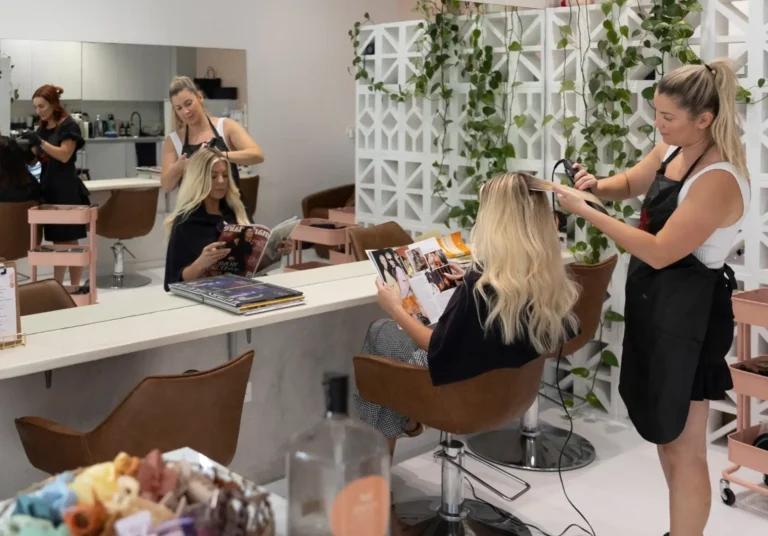
- hairdressers, barbers and beauty salons
- laundries and dry cleaners
- appliance, hardware and flooring stores
- florists and gift shops
- butchers, bakers and greengrocers
- clothing and footwear stores
- and many more.
However, a retail shop may also wholly or predominantly sell, hire or supply goods or services listed in Schedule 1 (e.g. beauty products).
Retail shopping centres
Your type of business or what you sell, hire or supply may not be listed in Schedule 1 but the lease could still come under the Act if it’s in a retail shopping centre. Section 5D of the Act defines a retail shopping centre generally as a strip or complex that:
- has at least five shops used for retail businesses (as per Schedule 1); and
- are owned by one person; or in one building or adjoining buildings owned or controlled by the same landlord; or comprise lots within a single community titles scheme under the Body Corporate and Community Management Act 1997; and
- are regarded or promoted as a shopping centre, mall, court or arcade.
What is not considered a retail shop lease?
Some leased premises are not covered by the Act:
- Shops larger than 1,000 square metres.
- A non-retail business in a complex with less than five premises used for retail businesses. For example a medical practice (these are not listed as a retail business in Schedule 1 of the regulation) in a strip mall that contains a café, a hairdresser, a pharmacy, a beauty salon (four shops listed as retail businesses in Schedule 1) and a a real estate agent (not listed as a retail business).
- Certain premises leased within the South Bank Corporation area.
- Premises within a theme park, at a flea market, at an arts and craft market.
- Temporary retail stalls at an agricultural show, carnival, festival or cultural event.
- A business carried on by the lessee on behalf of the lessor.
- Other exemptions listed in section 5A of the Act.
If you lease premises across Australia, most states have similar but distinct laws on what classifies as a retail business. There are some types of businesses the Queensland version of the Act does not consider to be retail shops including:
- gyms
- pilates studios
- real estate or property agents
- car dealerships or car yards
- medical centres
- tyre shops
- offices
- warehouses or storage
- bars or pubs (liquor retailing, for on-premises consumption)
- wholesalers.
Section 5A(3) explains generally a lease for a non-retail business (e.g. a gym) in a shopping centre is not a retail shop lease where the leased premises is on a level or in a single level building where 25% or less of the total lettable area is used for retail businesses. This section of the Act provides two examples for this type of situation:
- The wholesale sale of goods is not a retail business.
- Generally, a lease for a premises used as a residence is covered under other legislation.
Different laws also cover commercial (non-retail shop) leases, and you can read our blog about changes to the Property Law Act 2023 (Qld) to find out more.
Why classification matters
The Act provides important protections for retail shop lease tenants, including:
- disclosure obligations for landlords before lease entry or renewal
- restrictions on rent review methods
- obligations around outgoings
- prescribed notice timeframes when renewing the lease
- access to low-cost dispute resolution through the QSBC and QCAT under section 48 and Part 8 of the Act.
When you apply for mediation with the QSBC you’ll have to indicate whether the dispute is about a retail shop lease or other commercial lease.
A dispute lodged with the QSBC about a retail shop lease has a pathway via the QSBC mediation to QCAT. QCAT has no jurisdiction in commercial lease disputes—only retail shop lease disputes. Usually, the QSBC must hold the mediation conference in a dispute lodged about a retail shop lease, regardless of whether a respondent states they want to attend or not.
The QSBC can also mediate non-retail shop (other commercial) lease disputes, but both parties must agree to mediate the dispute for the mediation conference to be held under the Small Business Commissioner Act 2022.
The Courts and the Queensland Civil and Administrative Tribunal (QCAT) make determinations on what is a retail shop lease, not the QSBC.
An example of the complexities of determining a retail shop lease
A tenant leases a gym that also sells some equipment and is in dispute with their landlord. The gym is situated in ABC Shopping Plaza with a pub (incorporating a restaurant and coffee shop), a hardware store, a pet food store, a café and a pharmacy.
The solicitor for the tenant believes the lease is retail shop lease and the landlord believes it is not a retail shop lease. While Schedule 1 does not list a ‘gym’ as a retail business, it could be considered a retail shop lease if:
- the leased premises was less than a 1,000 square metres in size
- the premises were used predominantly for selling, hiring or supplying ‘exercise equipment’ (which is listed in Schedule 1)
- the pub (not listed in Schedule 1) was predominantly used for the carrying on of a restaurant and cafe (which are listed in Schedule 1)
- the shopping ‘plaza’ were classed as a retail shopping centre under the Act (keeping in mind the Act mentions ‘a cluster of premises being promoted or generally regarded as constituting a shopping centre, shopping mall, shopping court or shopping arcade’ (section 5D(d)).
The applicant must indicate what type of lease they have in the application to the QSBC
When you apply for mediation with the QSBC you’ll have to indicate whether the dispute is about a retail shop lease or other commercial lease. Whatever you indicate will trigger the act under which we proceed.
This is because the QSBC runs a facilitative process (we facilitate mediations) and does not investigate or determine what class of lease the dispute is about. The QSBC cannot tell you whether your lease is a retail shop lease or a commercial lease.
The QSBC progresses disputes to mediation based on the applicant’s notice of dispute they lodged.
If the notice was lodged as a retail shop lease dispute and that is disputed by the respondent, the QSBC will still organise the mediation as per the Retail Shop Leases Act 1994.
QCAT may determine later (via a determinative process: i.e. hearing evidence and arguments) whether it is a retail shop lease and is within its jurisdiction. If QCAT finds the dispute is not about a retail shop lease, QCAT may dismiss the dispute.
Does the 1,000 m² limit apply to the whole lease or just the retail space?
Case example 1: Farmers Arms Tavern Pty Ltd v Barns [2025] QCAT 134
In this case, the tenant brought a dispute to QCAT alleging that the landlord had breached the lease. The application was ultimately struck out because the total leased area exceeded 1,000 square metres, making the lease ineligible under the Retail Shop Leases Act 1994 (Qld), as per section 5A.
How the size was assessed
The tenant argued that only part of the tavern premises was used for retail purposes—suggesting that, when limited to the retail areas, the floor space was less than 1,000 m². They contended the Act should still apply.
However, QCAT rejected this. The Tribunal stated:
“The retail shop lease applies to the premises as defined in the lease. That definition includes the outdoor and indoor areas comprising the tavern.” [para 26]
“The total area is 1,143m². That is the area leased under the lease and there is no suggestion that part of the premises is subleased or otherwise not occupied by the Applicant.” (paragraph 27)
The Tribunal relied on the lease’s definition of the premises, which included both indoor and outdoor areas. As no part was legally separated or subleased, the full 1,143 m² was treated as a single tenancy.
Key takeaway
Arguments that only part of the leased area is used for retail may not succeed if the lease defines the premises as a whole. QCAT considered the total leased footprint and because it exceeded 1,000 m², the Act did not apply.
Case example 2: Suttons Beach Pavilion Pty Ltd v Moreton Bay City Council [2025] QCAT 135
Here, the tenant sought relief under the Retail Shop Leases Act, claiming the landlord had breached the lease. QCAT found it had no jurisdiction to hear the dispute because the premises exceeded the 1,000 m² threshold and was therefore excluded under section 5A.
How the size was assessed
The tenant leased the entire Suttons Beach Pavilion site from Moreton Bay City Council. The Tribunal confirmed: “It is not disputed that the premises leased under the lease were 1,287m² in total.” (paragraph 14). The tenant argued that only the retail shop component of their business should be considered and that it was under 1,000 m².
However, QCAT rejected this stating “The Lease is for the whole of the premises. There is no suggestion that any part of the premises was subleased to another entity. The total area must be taken to be 1,287m².” [para 15]
Key takeaway - be aware of the definitions and seek legal advice if unsure
Even though only part of the leased site was used for retail activity, in these two examples QCAT considered the total area leased under the agreement. If that area exceeds 1,000 m², the lease is excluded from the Act—unless portions are legally subleased or otherwise separated.
A solicitor may be able to give you advice on case law or other legal concepts that could impact the outcome of a determination made by QCAT. You should Seek Legal Advice to understand your specific situation.
Mediation is an opportunity to negotiate a solution, regardless of whether the lease is a retail shop lease or not. Importantly, the resources and information in this article are not legal advice and are not intended to be a substitute for legal advice and should not be relied upon as such.
To discuss your situation, and get connected with people that can help, reach out to our Assistance team.
Small Business Case Studies
Unpaid Invoices: Practical Steps to Help You Recover What’s Owed
Running a small business is no small feat, and when a client or customer doesn’t pay an invoice, it can be incredibly frustrating and stressful. Whether it’s a misunderstanding, a cash flow issue, a dispute over the goods or services provided, or the other business is simply unable or unwilling to pay, unpaid invoices are a common challenge for small businesses.

Meta shutdowns: The Risks of Relying on One Platform
Have you heard about small businesses having their Facebook and Instagram accounts instantly shut down, in some cases severely impacting their business? Here’s a look into what can happen and how you can help to protect your business from the impact of something similar.
What is a Retail Shop Lease in Queensland?
Understanding the term retail shop lease and whether it applies to your lease can be crucial (and complex). A lease won’t explicitly state that it is a retail shop lease.
Check out our Fact Sheets